


Stone is not manufactured. It is found — then read, cut and finished by people who know what they are looking at.
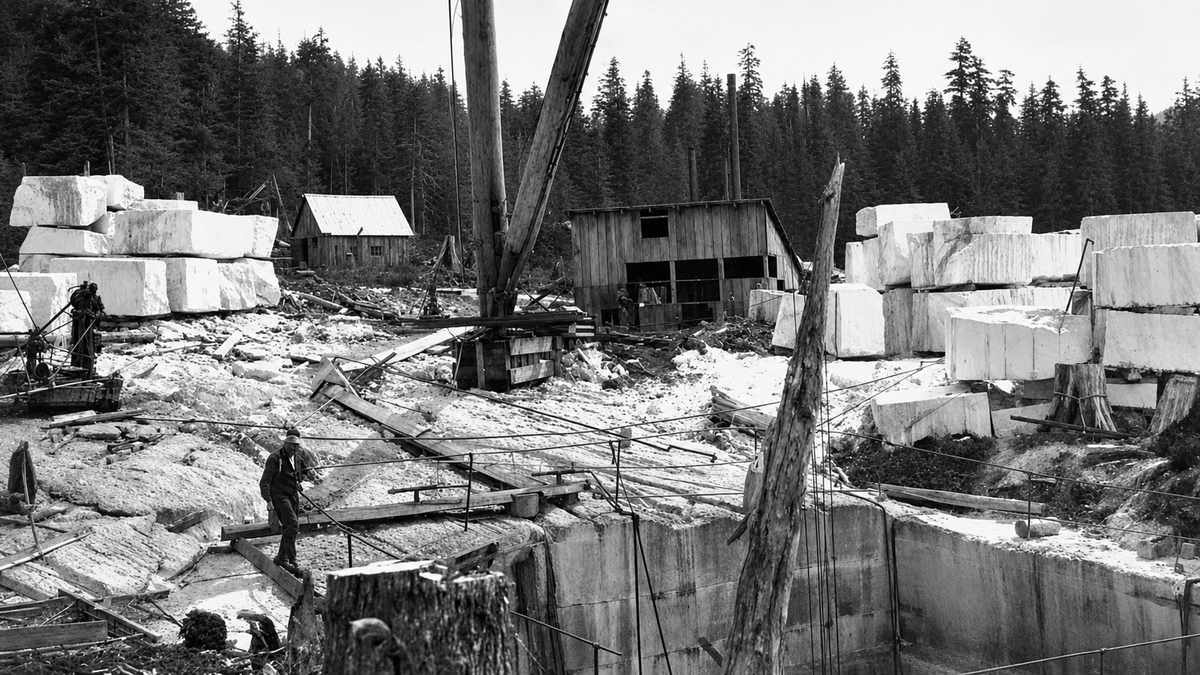
Every slab formed over thousands — sometimes millions — of years under pressure and movement. That history is why no two are alike, and why the slab in front of you matters more than the name on the label.
We buy from every corner of the world — Brazil, Italy, Spain, China, Vietnam, Turkey, Oman, Iran, India, the Middle East and across Africa — selecting for beauty first, then for the things you only notice years later: strength, consistency, how a surface behaves in a home.
What stone can be made to do
Anyone can supply a slab. The difference between stone that looks expensive and stone that looks inevitable is entirely in the decisions made before the saw is switched on — which part of the block, which direction, where the joint falls, how the light will hit the finish.
We come from three generations in the trade, and from stone restoration in the United Kingdom — trusted on a long list of London's heritage buildings. That is a discipline where the material cannot be replaced and every match is judged against a century of weathering. The tolerance you learn there does not leave you.
Judgement built on work that had no margin for error.
before it exists
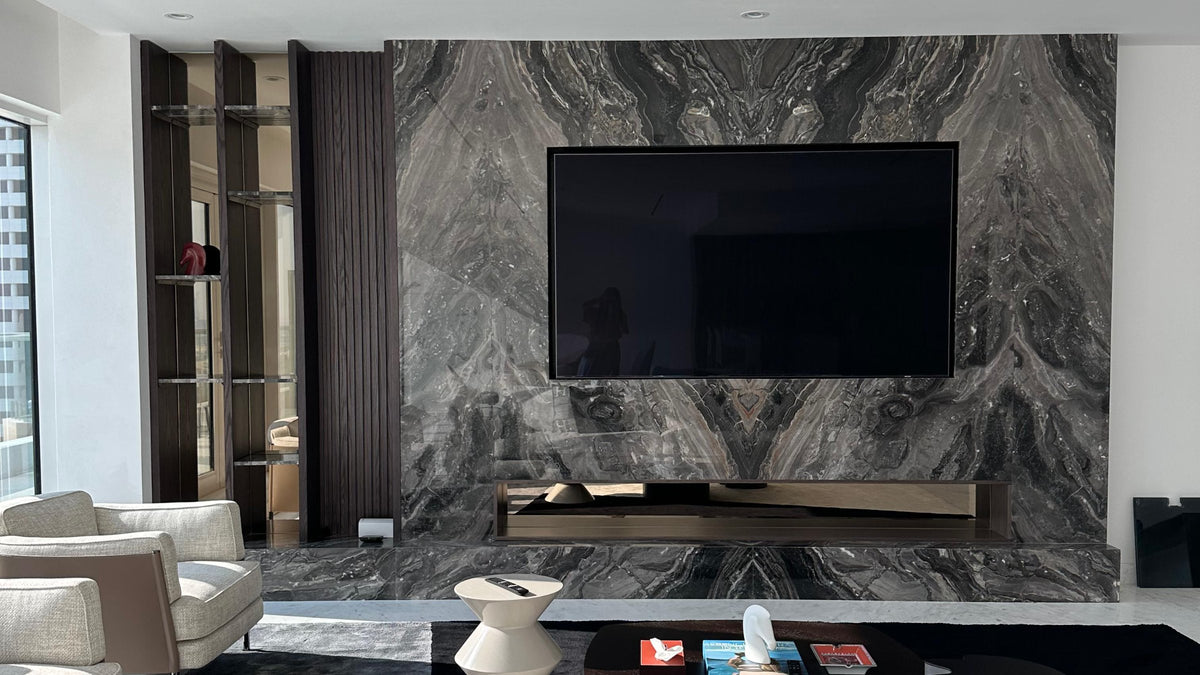
Cut a block one way and the vein runs in stripes; cut it the other and it opens into clouds. Same stone, two entirely different materials. Choosing that is the first act of design, and it happens at the quarry.
quarter-matched
Sequential slabs opened like the pages of a book mirror each other exactly. Four of them, quarter-matched, turn a floor or a wall into one composed image. It only works if the sequence is kept from the saw to the site.
are not meant to see
A mitred edge makes 20mm stone read as a 100mm monolith. Done properly the vein continues around the corner and the seam disappears; done carelessly it is the first thing anyone notices for the next twenty years.
Polished throws the room back at you. Honed absorbs it and lets the veining speak. Leathered holds a low sheen and hides every mark. Then the worked finishes — sandblasted, flamed, bush hammered — trade shine for grip and weather, and take the same slab somewhere else entirely.
Six finishes — hover or tap to openEvery corner
of the world
Marble, granite, quartzite, onyx, travertine, limestone, porcelain and semi-precious, from twenty-one regions across five continents. Filter by material, or tap a country to see what we bring in from it.
Drag to change
the material
One room, one piece, three stones. Choose what sits on each side of the line, then drag it across — the only honest way to see what a material change actually does to a space.
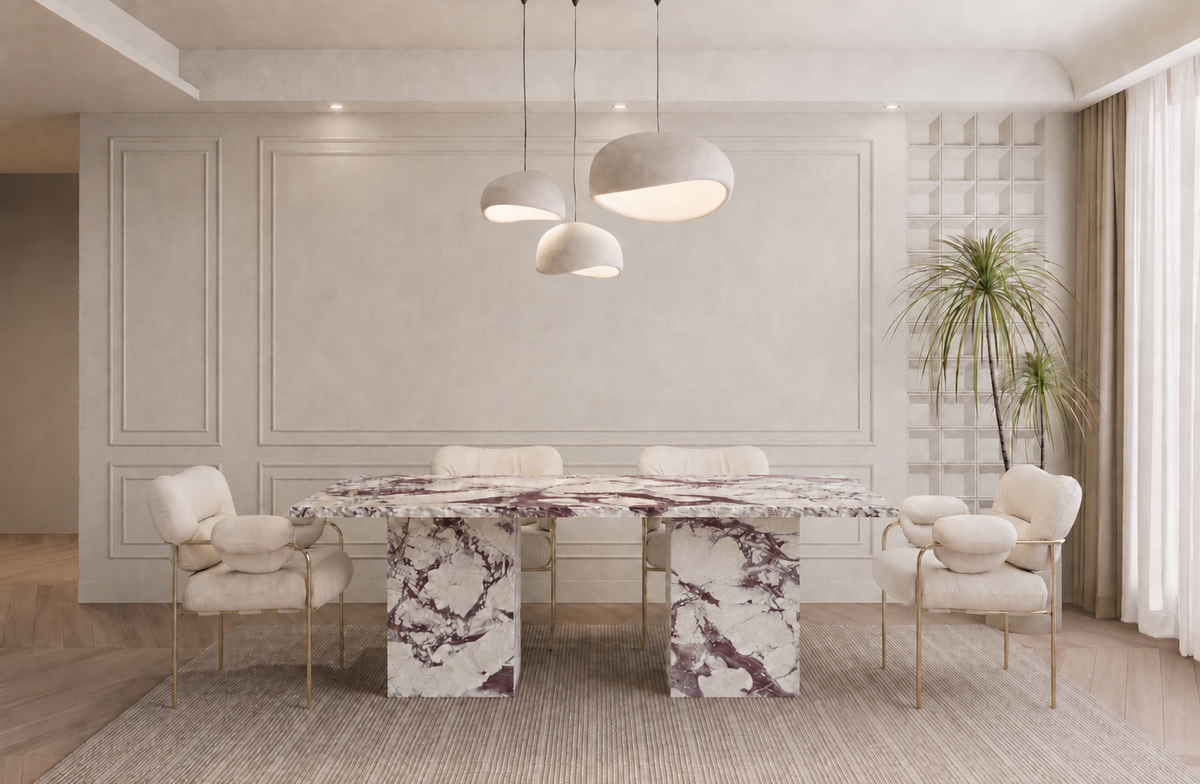
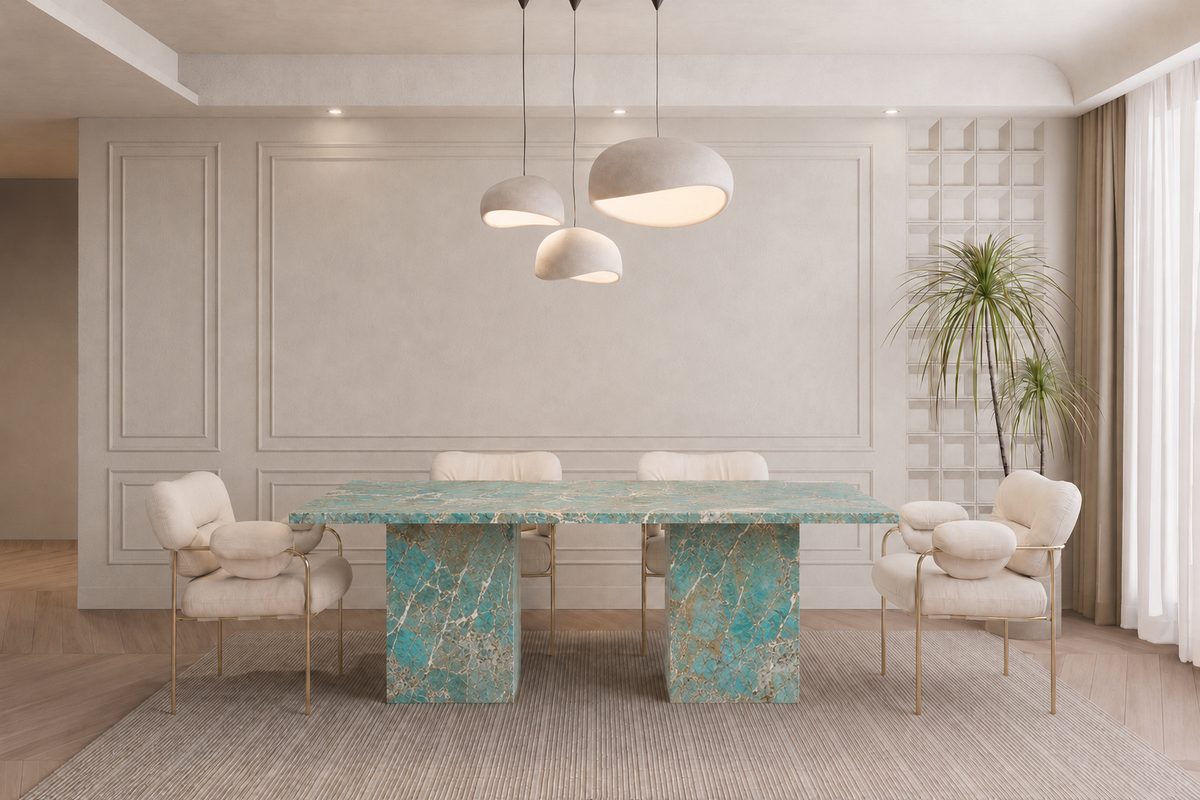
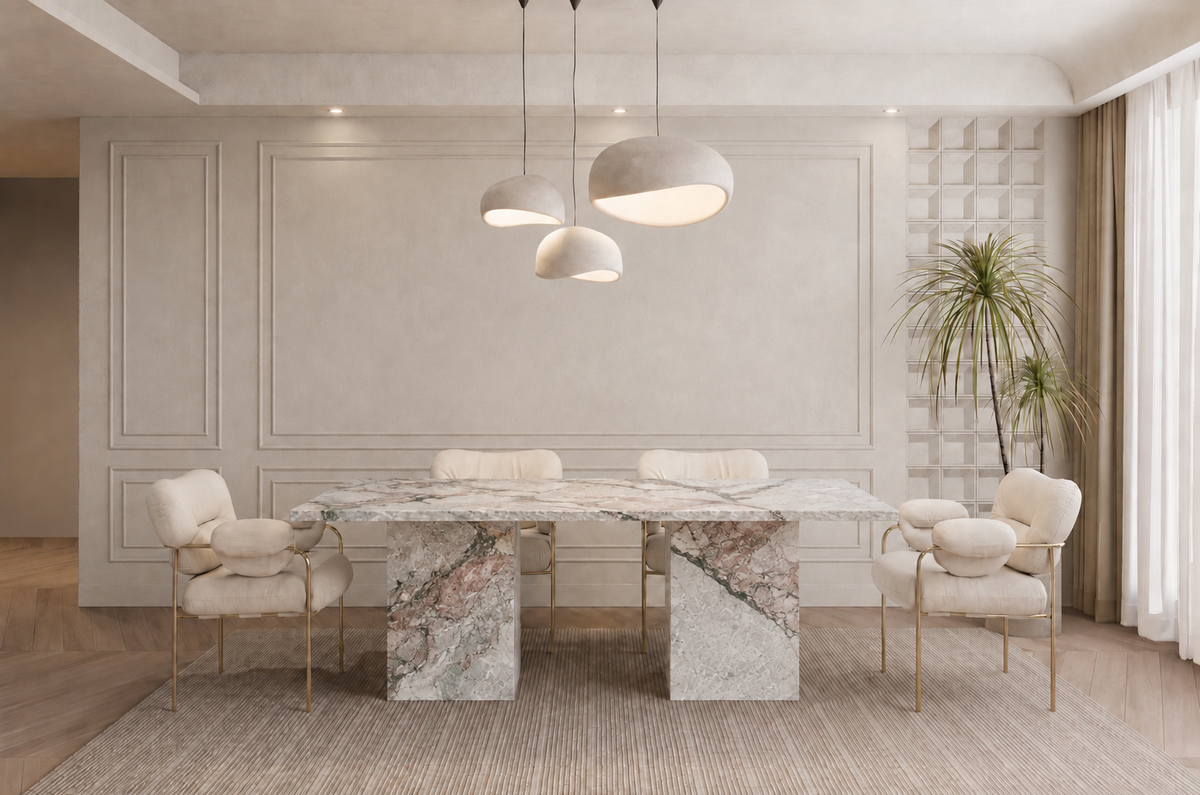
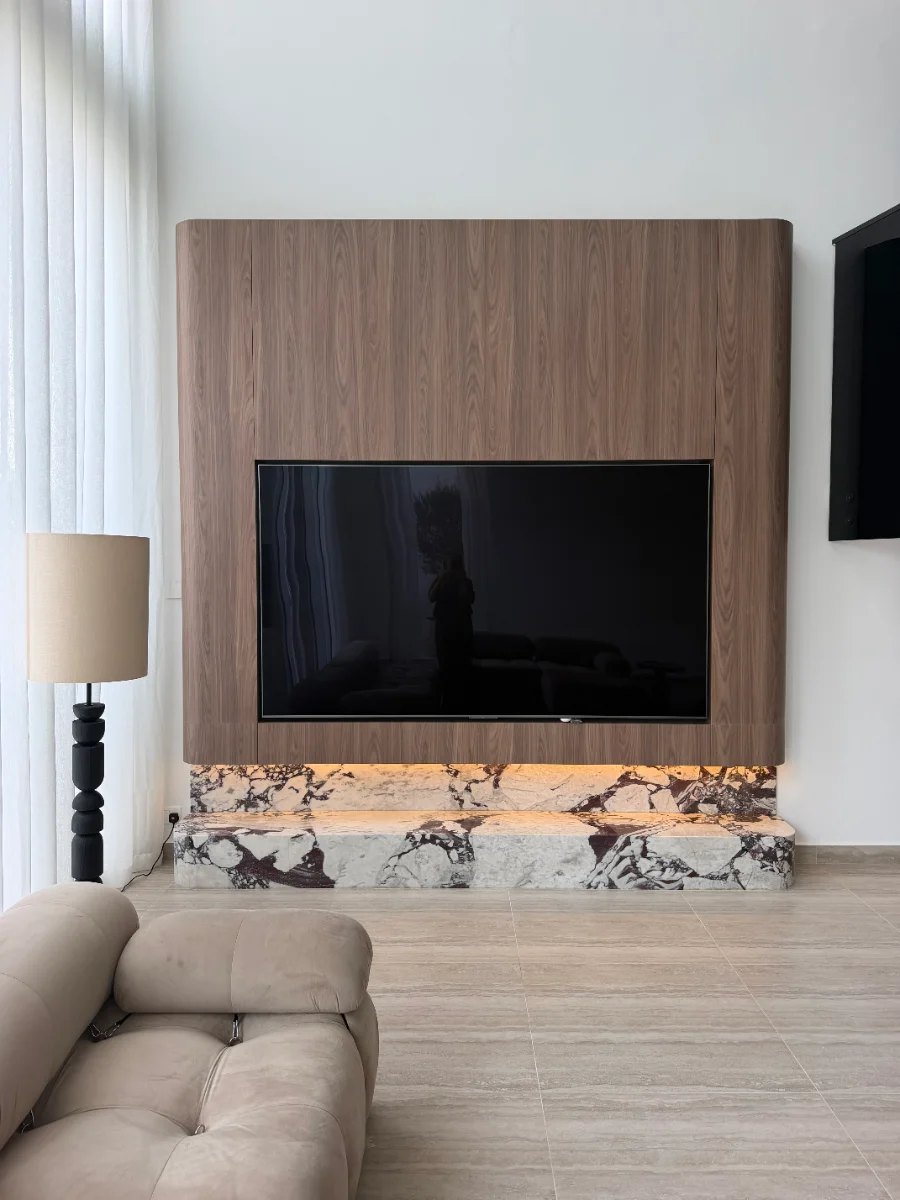
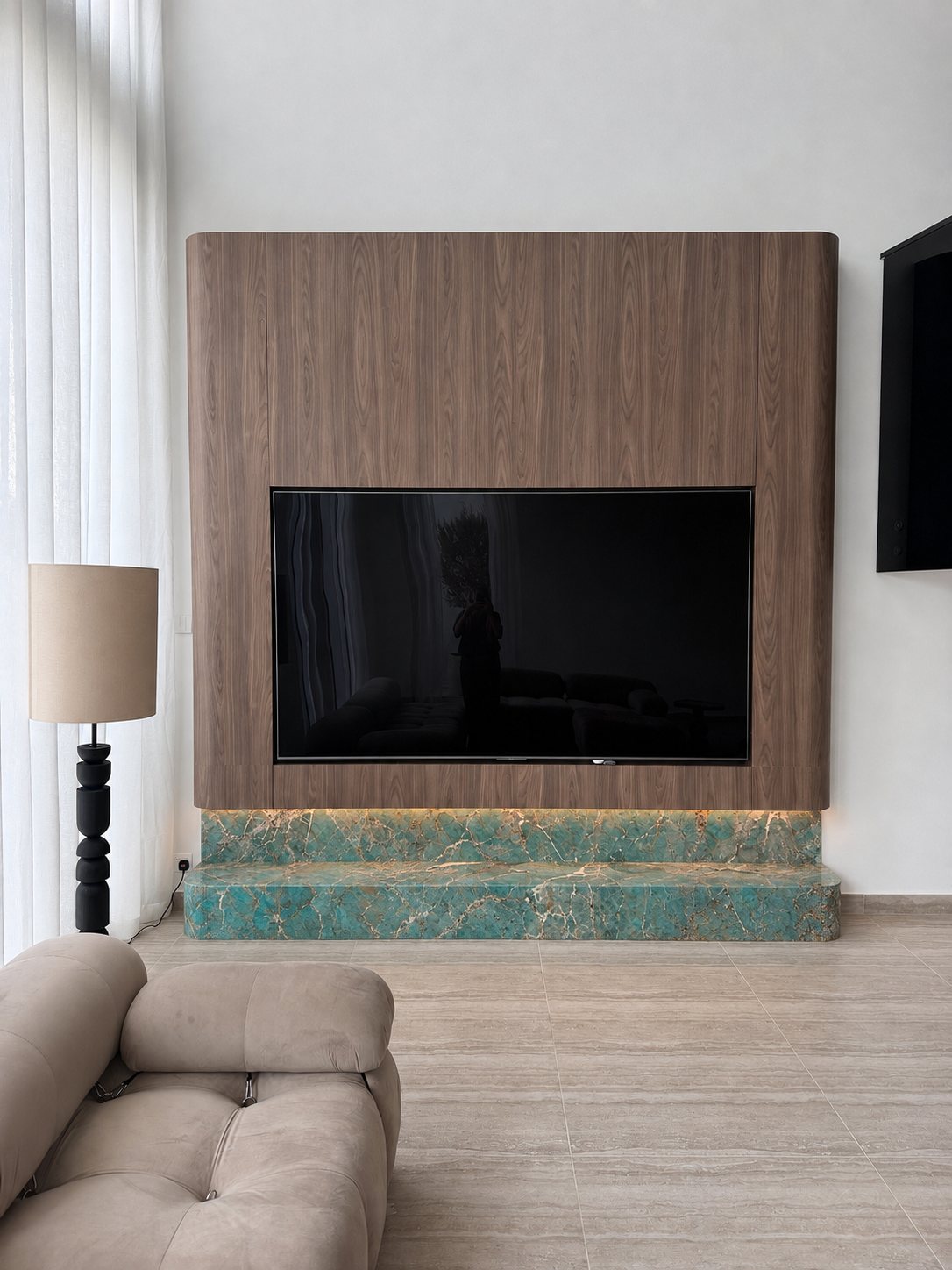
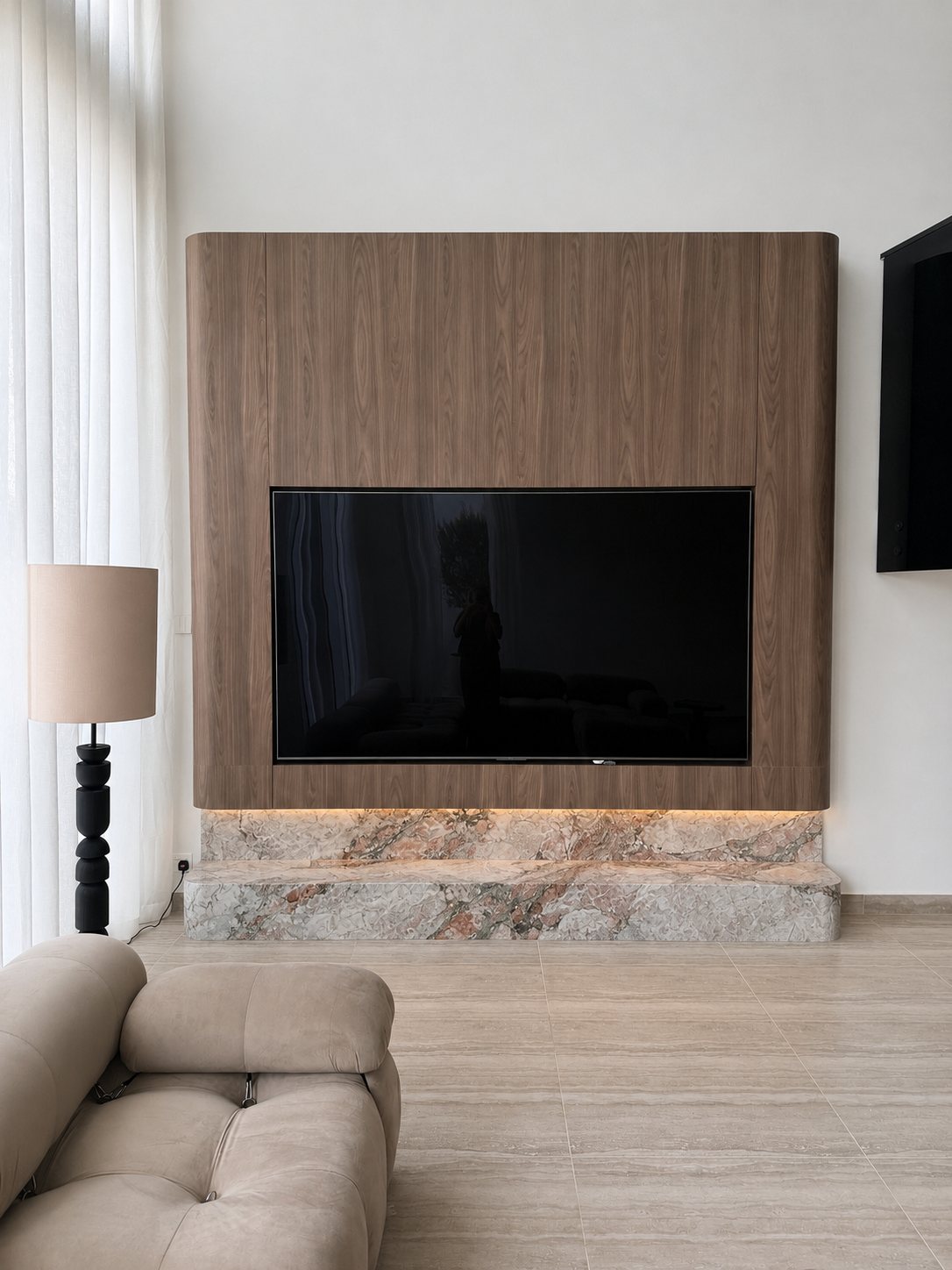
↑ Slide to the left, slide to the right
Where it's going decides
what it should be
counters
Daily heat, acid and knives. Quartz and granite hold up with the least thought; marble is possible if you accept a patina.
Quartz · Granite · Porcelainvanities
Low-traffic and mostly water — the place to spend on a slab you actually love. Sealing keeps marble and travertine calm.
Marble · Travertine · Quartzstairs
Large areas want repeatable material and grip. Book-matching matters less here than tonal consistency across the batch.
Porcelain · Granite · Travertinefurniture
A single slab read as one picture. This is where dramatic veining earns its price — the piece is the artwork.
Marble · Quartzite · Travertinewalls
Vertical, untouched, lit from the side. Almost anything works — so choose for the veining pattern and how the sheets align.
Marble · Quartzite · Porcelainpoolside
Sun, salt and 45°C. Honed and filled travertine or a dark granite stays cooler underfoot and holds grip wet — a polished pale marble does neither.
Travertine · Granite · Porcelain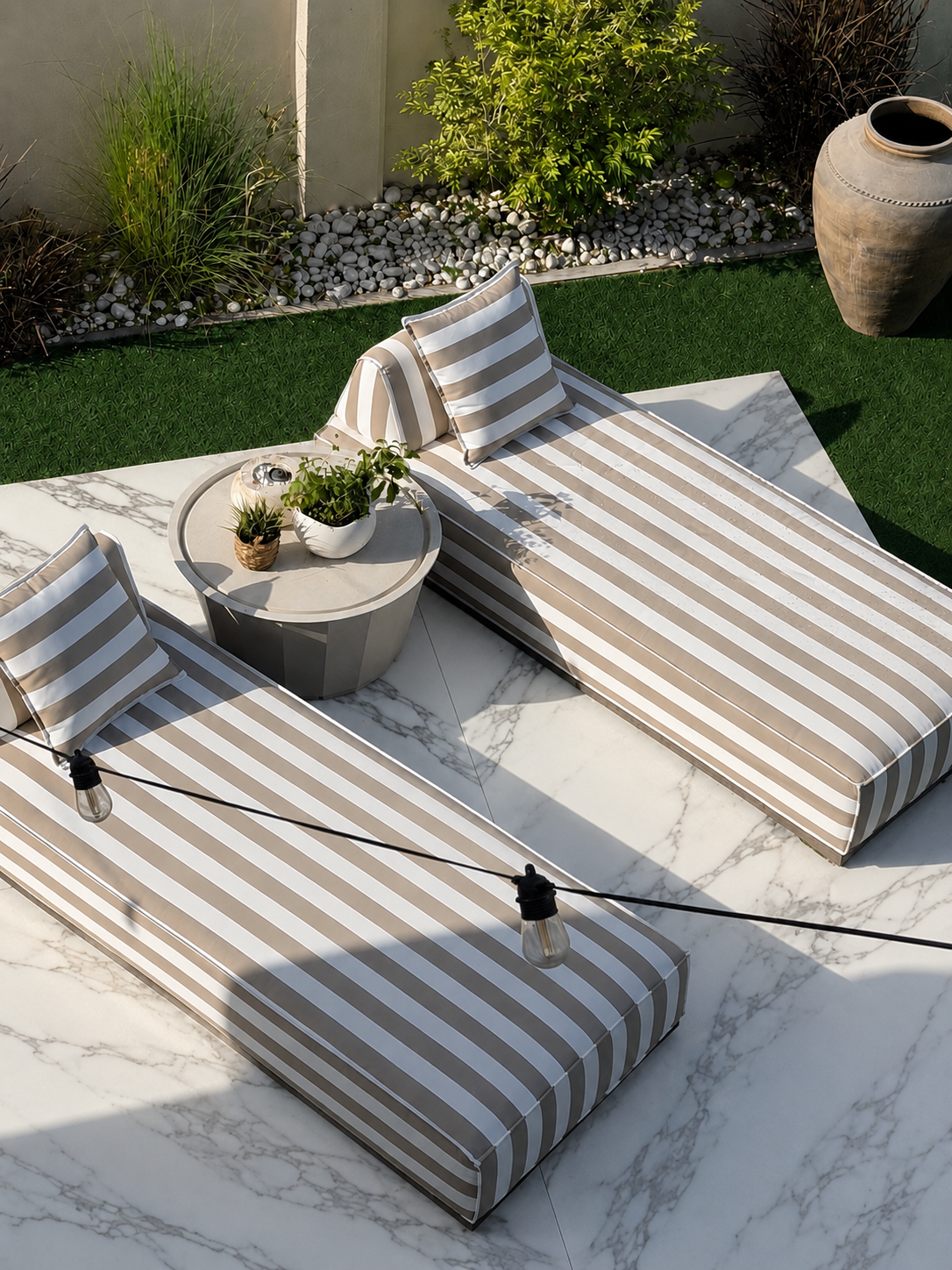
Four hands on it
before yours
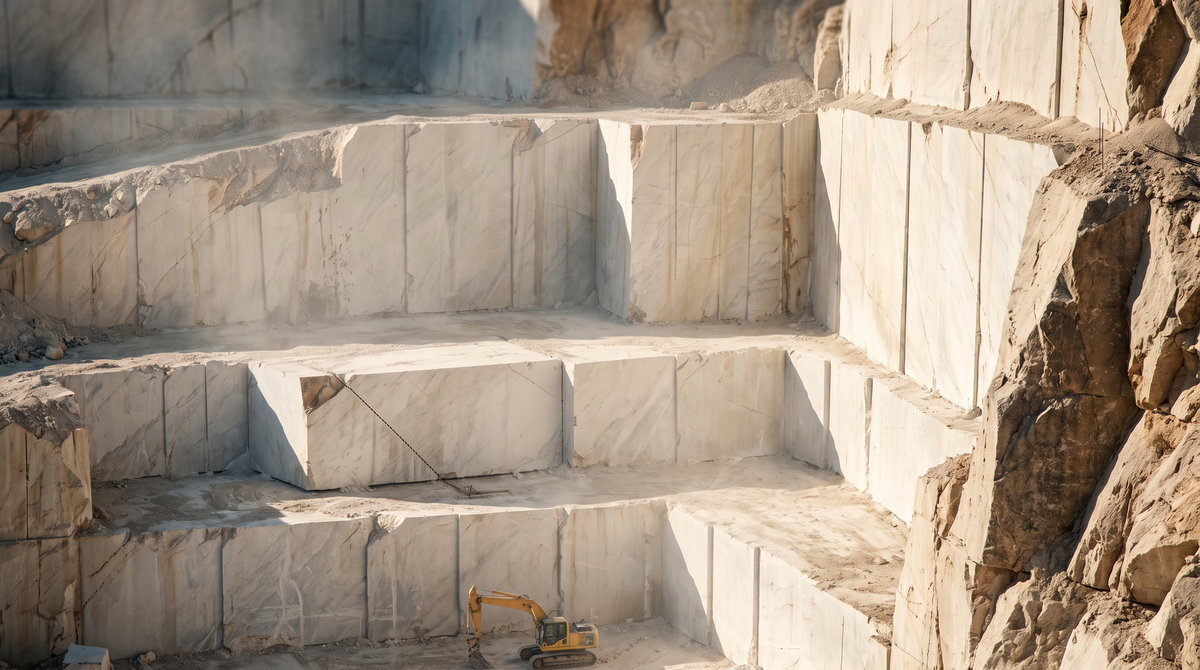
A quarry is a mountain being taken apart in blocks. Diamond wire cuts a bench free and it is lifted out whole — never blasted, because shock fractures stone invisibly and the damage only shows up later.
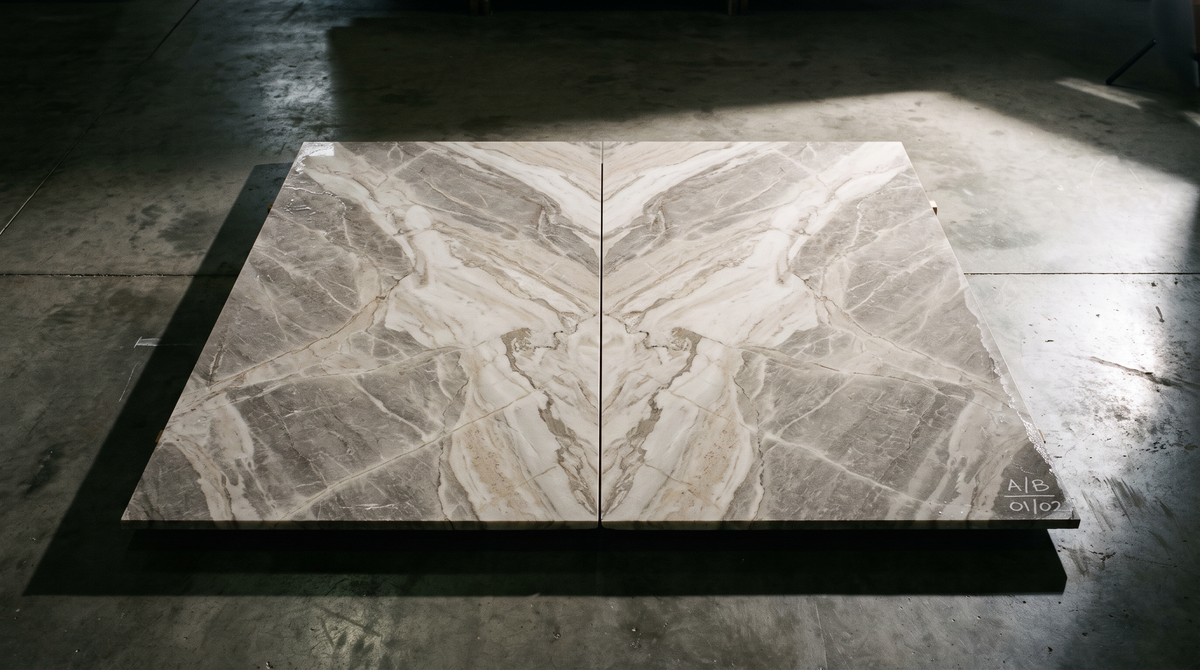
Slabs stay in the order they left the block, which is what makes book-matching possible. We walk the bundle slab by slab — vein direction, tone across the batch, and any fault that will fail once it is cut down.
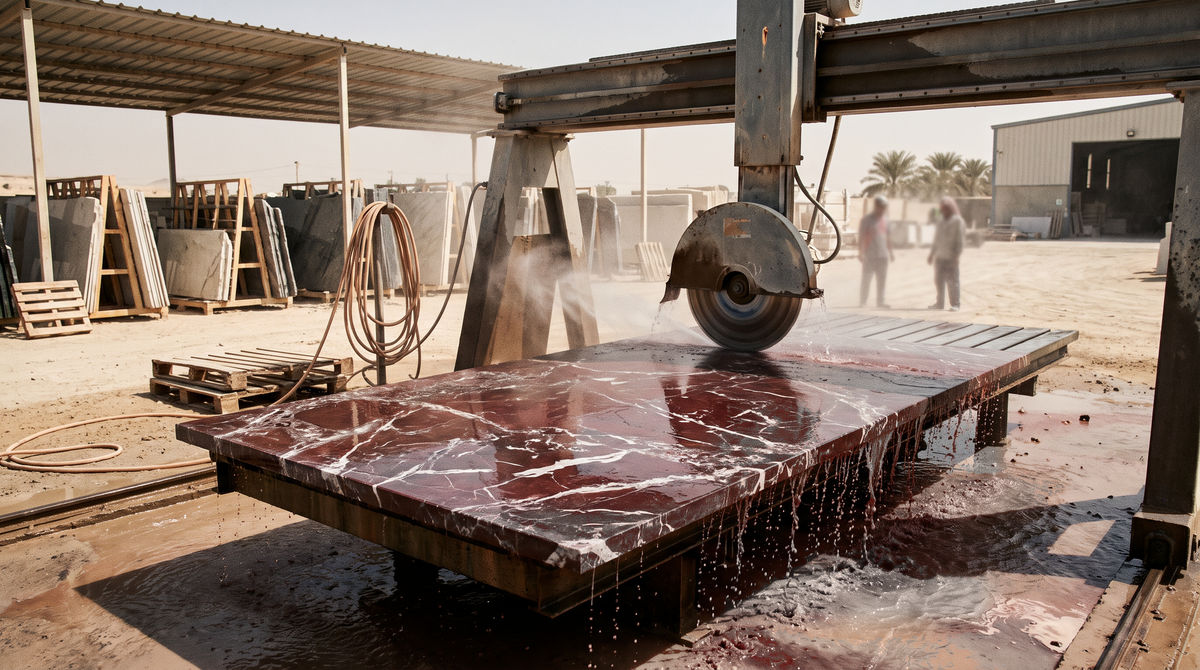
We template the space, then lay the cut out on the actual slab so joints, mitres and book-matched faces land where they should — never through the middle of the feature. Cut wet, under the blade, in our own yard in Dubai.
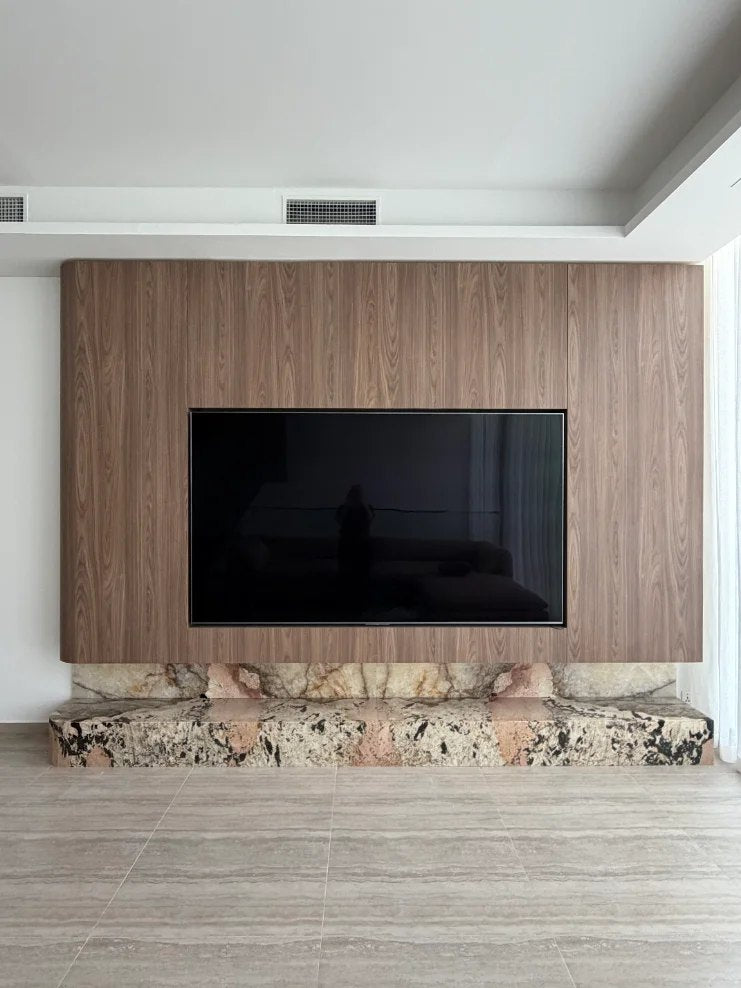
Fitted, joints closed and polished flush, then sealed with the product that suits that stone — and care guidance for the material you actually bought, because the cleaner that is fine on granite will dull a marble in a season.
Six materials,
Six temperaments
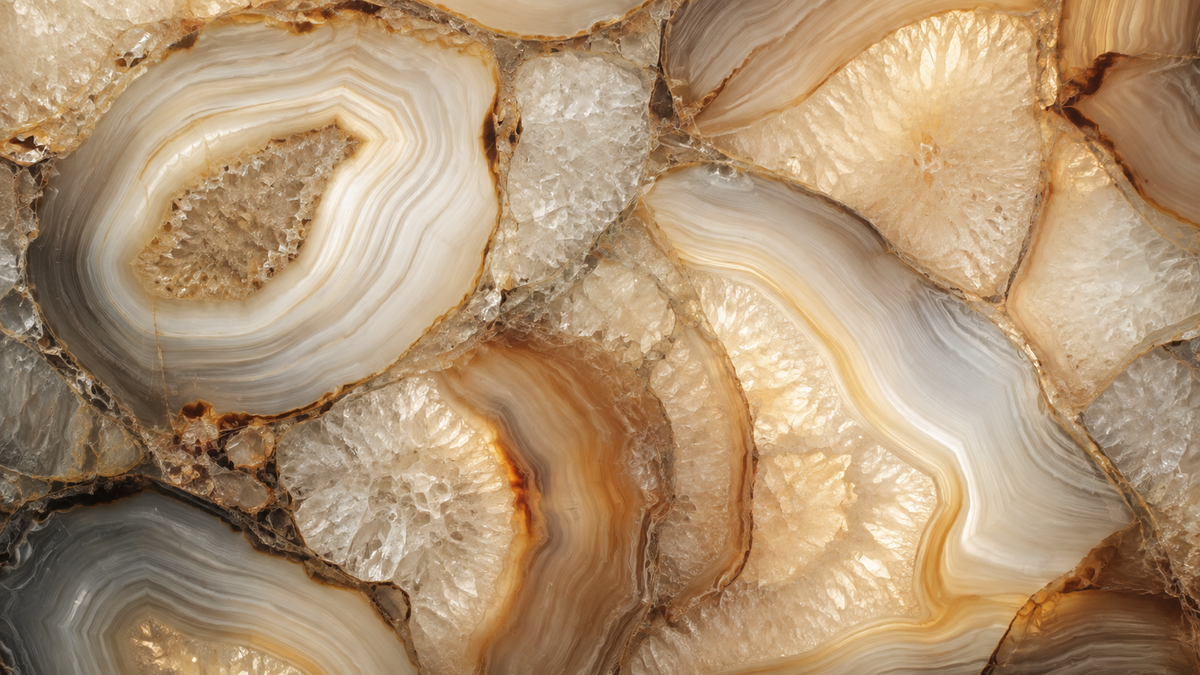
Agate, amethyst, tiger's eye, rose quartz, malachite. Not quarried in slabs but assembled — sections cut from individual stones, matched and set into a panel, then backlit so the banding reads like stained glass. Commissioned by the piece.
Backlit features · bars · table tops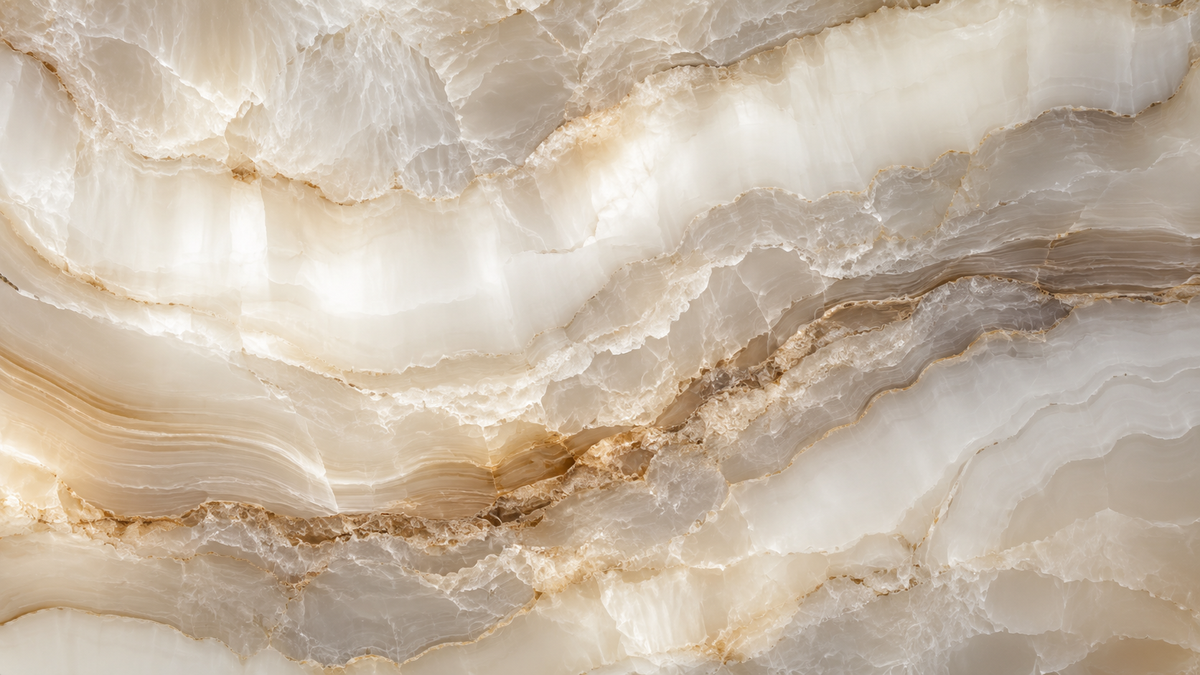
Translucent, banded and formed in caves rather than under pressure. Lit from behind it stops being a surface and becomes light — the most theatrical stone there is, and the most delicate.
Backlit panels · bars · vanities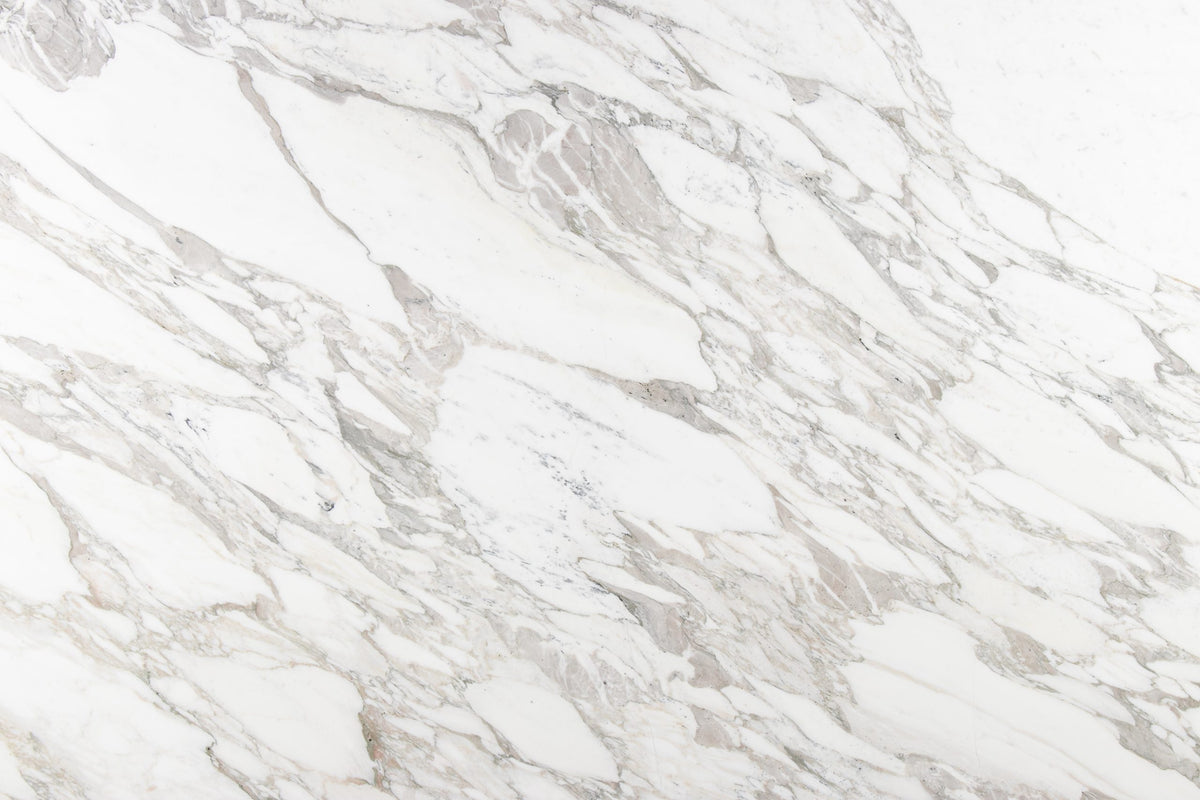
Soft, luminous, expressive. Porous and reactive by nature — it takes on a patina, which is either the point or the problem.
Vanities · tables · walls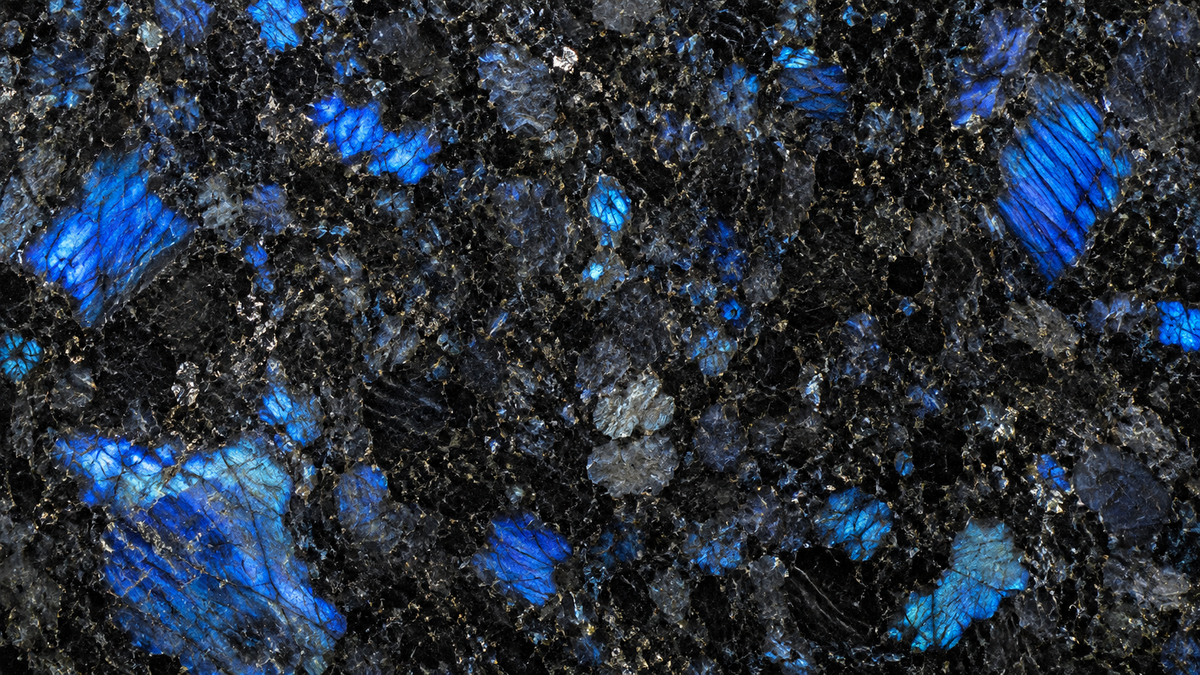
Igneous and hard-wearing, crystalline rather than veined. Lemurian Blue is the one that changes minds — iridescent blue flecks that shift as you move past it.
Counters · floors · outdoors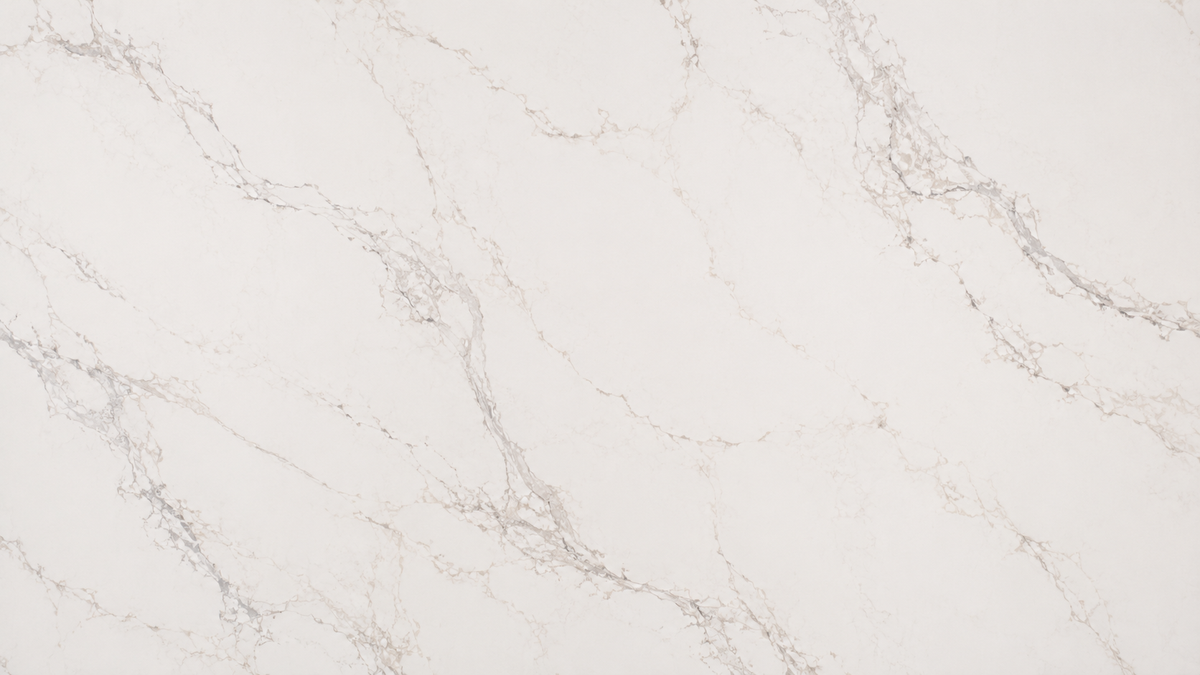
Engineered for consistency, or natural quartzite for marble-like veining with far more resilience. Both are low-maintenance.
Counters · vanities · tables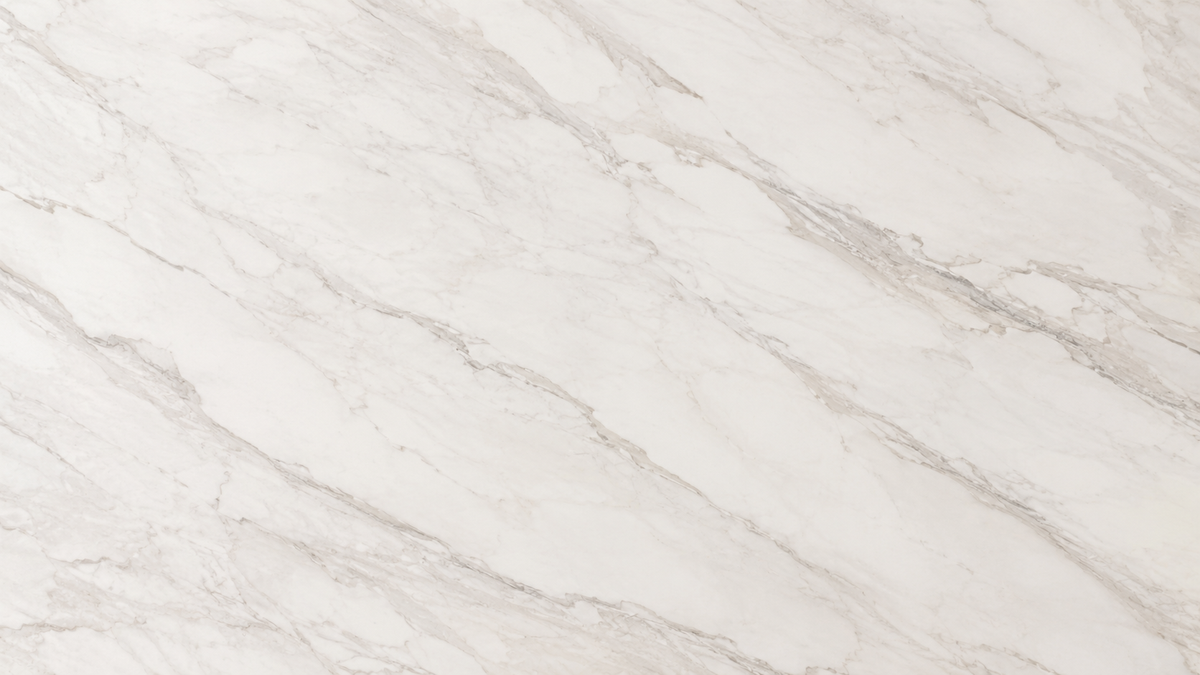
Non-porous, thin, dimensionally stable and available in very large formats — the practical answer for wide floors and cladding.
Floors · cladding · wet areasSee it in the hand
before you commit
Photographs flatten stone. Send us the room, the use and the tone you're after — we'll come back with a price and slabs worth looking at, or you can see them in person in Dubai.